.png)
什么是暴露与反应预防疗法?它能帮助你吗?What Is Exposure and Response Prevention (ERP)? And could it help you?

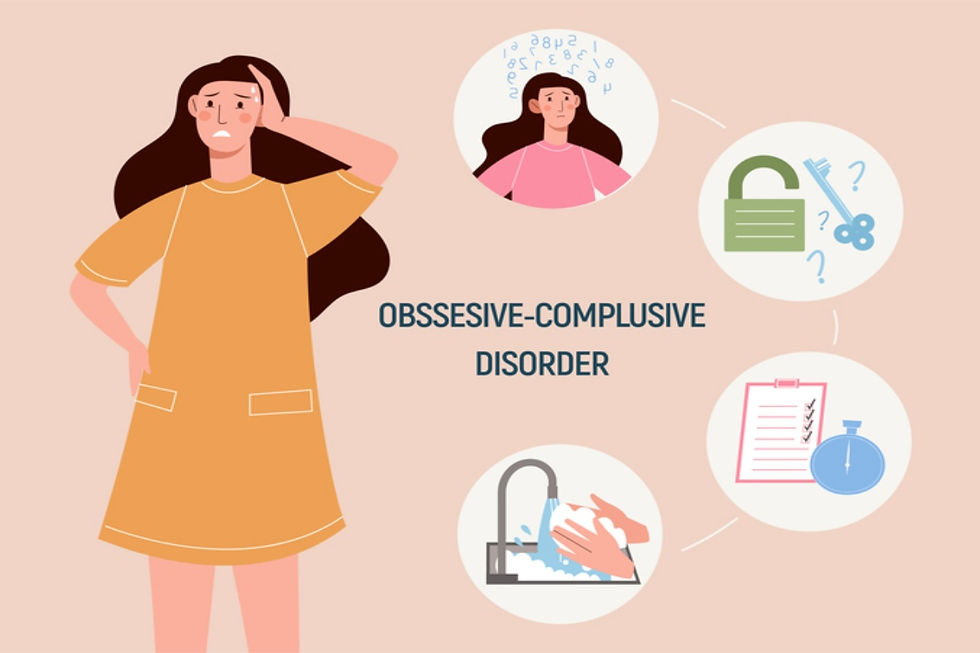
你是否发现自己陷入这样一个循环:
焦虑不断出现,脑海中反复冒出令人困扰的想法,而你不得不通过某些重复行为来缓解不安,却发现这种缓解只是暂时的?
Do you find yourself trapped in a cycle of anxiety, intrusive thoughts, and repetitive behaviors that provide only temporary relief?
许多患有强迫症和焦虑障碍的人都会经历这样的模式:恐惧和焦虑引发强迫行为,而这些行为虽然能够短暂减轻焦虑,却会在长远上让焦虑变得更加强烈。
Many people struggling with Obsessive-Compulsive Disorder (OCD) and anxiety disorders experience a pattern where fear leads to compulsive behaviors, which briefly reduce anxiety but ultimately make it stronger over time.
暴露与反应预防疗法 是目前治疗强迫症和焦虑相关障碍最有效、研究证据最充分的心理治疗方法之一。大量研究表明,暴露与反应预防疗法能够显著减轻症状,帮助人们重新掌控自己的生活。
Exposure and Response Prevention (ERP) is one of the most effective, evidence-based treatments available for OCD and anxiety-related disorders. Research consistently shows that ERP can significantly reduce symptoms and help people regain control of their lives.
理解焦虑与强迫行为的循环
Understanding the Anxiety and Compulsion Cycle
在了解 暴露与反应预防疗法如何发挥作用之前,我们需要先了解它所针对的循环模式。
To understand how ERP works, it's important to first understand the cycle it is designed to break.
这个循环通常是这样的:
触发事件 → 焦虑 → 强迫行为 → 暂时缓解 → 更强烈的焦虑
The cycle often looks like this:
Trigger → Anxiety → Compulsion → Temporary Relief → More Anxiety
例如:
一个侵入性想法引发焦虑;
为了缓解痛苦,一个人开始进行强迫行为,例如反复检查、寻求保证、回避、反复思考或某种仪式化行为;
焦虑暂时下降;
大脑逐渐学会:“只有通过这些行为,我才能感到安全”;
焦虑再次出现,而且往往比之前更强烈。
For example:
An intrusive thought creates anxiety.
To reduce distress, a person engages in a compulsion such as checking, reassurance-seeking, avoidance, mental reviewing, or repetitive rituals.
Anxiety decreases temporarily.
The brain learns that compulsions are necessary to feel safe.
Anxiety returns, often stronger than before.
随着时间推移,这种循环不断强化恐惧,使症状越来越难以控制。
Over time, this cycle reinforces fear and makes symptoms more difficult to manage.
什么是暴露与反应预防疗法?
What Is Exposure and Response Prevention (ERP)?
暴露与反应预防疗法 是一种特殊形式的认知行为疗法,旨在帮助个体逐步面对自己害怕的情境,同时避免进行强迫行为。
Exposure and Response Prevention is a specialized form of Cognitive Behavioral Therapy (CBT) that helps individuals gradually confront feared situations while resisting compulsive behaviors.
暴露与反应预防疗法 包含两个核心部分:
ERP consists of two key components:
1. 暴露
1. Exposure
暴露是指有计划地、循序渐进地面对那些会引发焦虑的情境、想法、画面、身体感觉或触发因素。
Exposure involves intentionally and gradually facing situations, thoughts, images, sensations, or triggers that cause anxiety.
暴露与反应预防疗法的目标并不是让一个人一下子面对巨大的恐惧,也不是强迫他们承受无法忍受的压力。相反,治疗过程通常会经过精心设计,并根据个人情况循序渐进地进行。
The goal is not to overwhelm someone or force them into distress. Instead, exposures are carefully planned and conducted at a manageable pace.
大多数 暴露与反应预防疗法都会建立一个暴露等级表,从轻微不适的情境开始,逐步挑战更困难的情境。
Most ERP treatment plans use an exposure hierarchy, starting with mildly anxiety-provoking situations and gradually progressing to more challenging ones.
2. 反应预防
2. Response Prevention
反应预防是指当焦虑出现后,刻意不去进行那些平时用来缓解焦虑的强迫行为。
Response prevention means resisting the urge to engage in compulsive behaviors after experiencing anxiety.
它要求我们承受焦虑和不适感,而不是立即采取行动消除它们。通过这种练习,人们会逐渐发现:虽然焦虑是真实存在的,但它是暂时的,而且自己有能力承受和度过这种不适。
It means sitting with discomfort without neutralizing it — and discovering that the discomfort, while real, is temporary and survivable.
暴露与反应预防疗法如何帮助大脑重新学习?
How ERP Helps Rewire the Brain
暴露与反应预防疗法最强大的作用之一,是帮助大脑学习一个新的事实:
焦虑令人不舒服,但它并不危险。
One of the most powerful aspects of ERP is that it teaches the brain a new lesson:
Anxiety is uncomfortable, but it is not dangerous.
当一个人反复面对害怕的情境,却没有进行强迫行为时,他们会逐渐发现:
害怕的结果往往并没有发生;
焦虑会随着时间自然下降;
自己有能力容忍不确定感和不适感。
As individuals repeatedly face feared situations without performing compulsions, they discover that:
The feared outcome often does not occur.
Anxiety decreases naturally over time.
They are capable of tolerating uncertainty and discomfort.
这个过程会逐渐削弱恐惧与强迫行为之间的联系,从而带来长期而稳定的症状改善。
This process helps weaken the connection between fear and compulsive behavior, leading to lasting symptom improvement.
哪些人适合 暴露与反应预防疗法?
Who Can Benefit from ERP Therapy?
虽然 暴露与反应预防疗法 最初是为治疗强迫症而开发的,但如今已经广泛应用于多种焦虑相关问题。
Although ERP was originally developed as a treatment for Obsessive-Compulsive Disorder (OCD), it is now widely used for a variety of anxiety-related conditions.
暴露与反应预防疗法可能帮助以下人群:
强迫症
社交焦虑障碍
惊恐障碍
特定恐惧症
健康焦虑
ERP may help individuals experiencing:
· Obsessive-Compulsive Disorder (OCD)
· Social Anxiety Disorder
· Panic Disorder
· Specific Phobias
· Health Anxiety
如果你的焦虑长期受到回避行为、仪式化行为或强迫行为的维持,那么暴露与反应预防疗法可能是一种值得考虑的治疗选择。
If avoidance, rituals, or compulsions are maintaining anxiety, ERP may be an effective treatment option.
暴露与反应预防疗法会是什么样的体验?
What Does ERP Feel Like?
暴露与反应预防疗法要求我们主动靠近那些让自己不舒服的事物,而不是像过去一样逃避它们。这与焦虑驱使我们的本能反应恰恰相反,因此在治疗初期可能会感到挑战重重。
ERP requires moving toward discomfort rather than avoiding it, which can feel counterintuitive when anxiety is already overwhelming.
然而,这种不适感是暂时的,也是有意义的。
However, the discomfort experienced during ERP is temporary and purposeful.
许多人在治疗过程中会逐渐发现:
焦虑变得更加容易管理;
强迫行为明显减少;
自信心逐渐提升;
日常生活功能得到改善。
Most individuals find that as treatment progresses:
Anxiety becomes more manageable.
Compulsive behaviors decrease.
Confidence increases.
Daily functioning improves.
大量研究一致表明,暴露与反应预防疗法是治疗强迫症和焦虑障碍最有效的方法之一。
Research consistently demonstrates that ERP is one of the most effective treatments available for OCD and anxiety disorders.


Comments